
Majestic Live Oaks and Red Oaks are more than just shade trees here in Houston. They are significant investments in property value and local history.
But Houston homeowners who cultivate these trees should know that there’s a silent, aggressive fungal pathogen that can harm them. It’s called Oak Wilt, and it’s one of the most destructive tree diseases in the United States.
Sadly, it has a firm foothold here in the Houston area.
Knowing how to spot the early warning signs can mean the difference between saving a neighborhood treasure and facing an expensive removal.
What’s the most obvious sign of oak wilt?
You’ll be looking for a pattern called veinal necrosis. The veins of the leaf turn yellow or brown while the rest of the leaf tissue remains green.
This happens because the fungus invades the tree’s water-conducting system, known as the xylem, essentially plugging up the vessels. As the tree loses its ability to transport water to its furthest reaches, the leaves begin to die from the center out.
Does the canopy look thin or discolored?
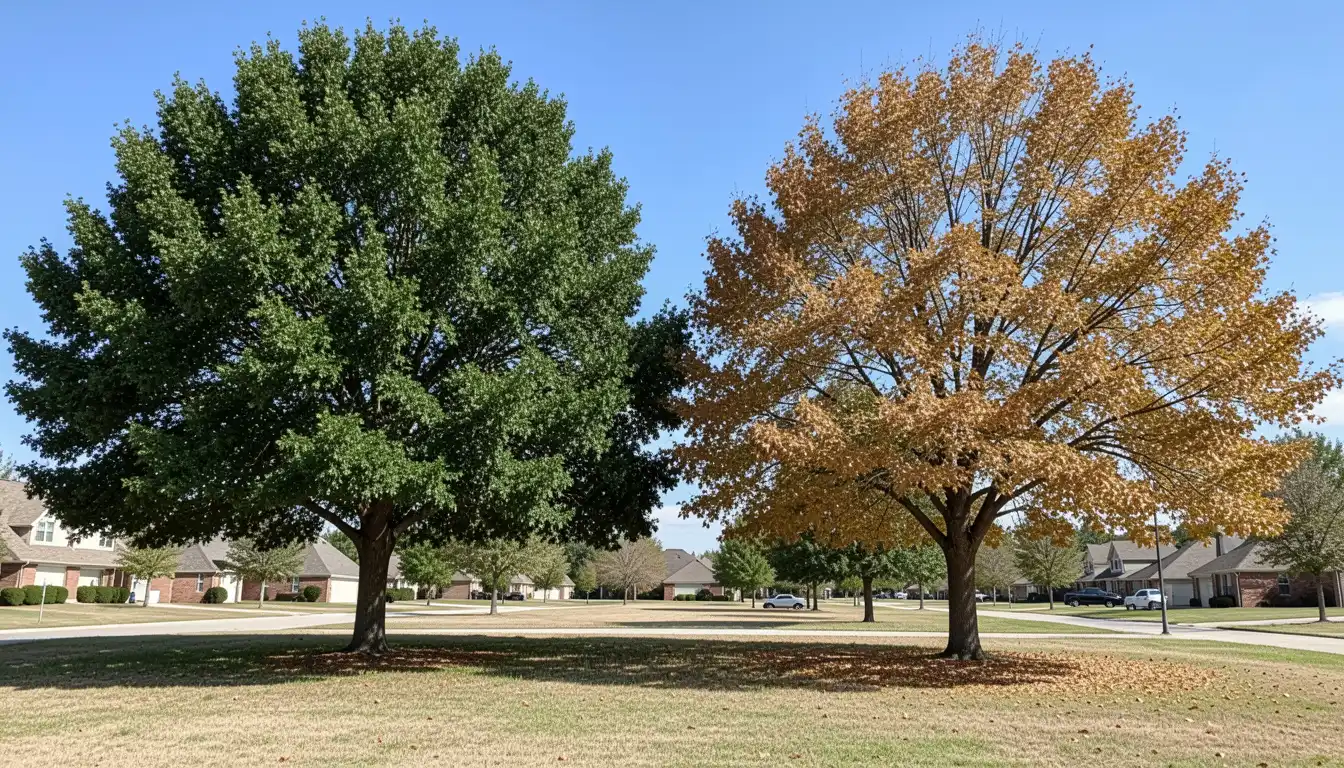
Red Oaks are more susceptible to the disease than live oaks, and the progression is often much faster. If you have Red Oaks, you might notice the leaves at the very top of the canopy turning a pale green or bronze color before wilting rapidly.
In many cases, the Red Oak can go from looking healthy to being completely defoliated in four to six weeks. If you notice sudden leaf fall where green or partially green leaves are dropping to the ground in large numbers, then it’s time to call a professional.
Is there a change beneath the bark?
While leaf patterns are the primary indicator, the fungus also leaves clues on the trunk. In certain conditions, fungal mats may form under the bark of infected Red Oaks. These mats produce a distinct, fruity odor that attracts the Nitidulid beetle (sap beetle).
These beetles are the primary carriers of the disease, moving spores from infected trees to fresh wounds on healthy ones. If you see cracks in the bark or notice an unusual amount of beetle activity around a specific limb, the tree may be fighting an internal infection.
How does the disease spread underground?
One of the most frustrating aspects of Oak Wilt in Texas is its ability to spread through a process known as root grating.
Because many oaks in a residential area are planted close together, their roots often interlock and fuse over time.
This creates a shared circulatory system, allowing the fungus to move from one tree to another without the need for an insect carrier. If your neighbor’s oak has recently died and yours is beginning to show signs of decline, the infection may be moving through the soil.
What should you do if you suspect an infection?
Early diagnosis is critical. Because Oak Wilt systems can sometimes mimic drought stress or nutrient deficiencies, it’s vital to have a professional assessment. Avoid pruning your oaks during the spring when beetle activity is highest (clear up until June).
If you suspect your trees are at risk, reach out for a professional evaluation today!